A History of Low Smithy Chapel, Garsdale
The following was prepared by Matt McVoy for the Chapel Anniversary and Final Thanksgiving Service for Low Smithy on Sunday, 10th May 2026.
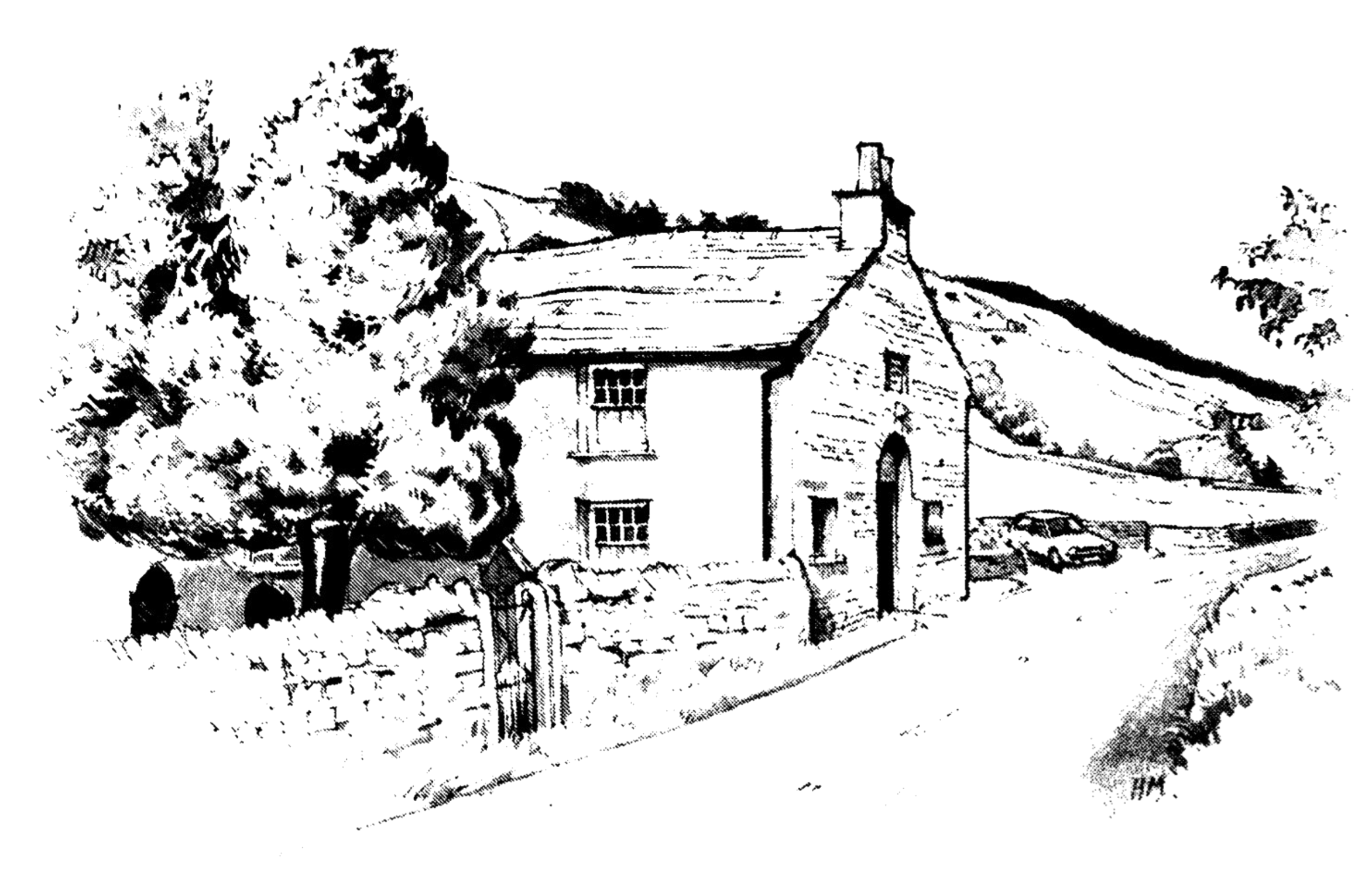
The history of Garsdale Low Smith is not simply something written down in records, deeds, circuit minutes, chapel returns, and old articles. It’s also held in memory and affection and in family stories and in the names on the stones outside, and in the quiet faithfulness of those who have worshipped here and served here, cared for this place, and carried its witness across the years.
This chapel is a place shaped by local lives and generations of worship.
The chapel was built in 1830, and the old records describe Jonathan Kershaw as the cause of its construction. It’s a lovely phrase, because it reminds us that chapels are not only built out of stone, timber, slate, money, and labour but also built out of conviction. They begin because someone believes that the gospel must be preached, that people need a place to gather, and that faith must be given a home in a particular community.
Historic England records it as a Grade II listed building, officially listed as Smithy Chapel to South East of Blades. The listing describes a Methodist chapel on the south gable, built of coursed rubble stone, with quoins, a stone slate roof, and a tall round-headed doorway facing the road. Historic England also notes that the building may include earlier fabric, because the south gable appears to be an extension.
Jonathan Kershaw is remembered as the ‘Apostle to the Dales’, He was an itinerant preacher and tea salesman, probably supplied with tea by James Buck, a grocer and tea trader at Kiln Haw in Garsdale. His work took him from place to place, selling tea during the day and preaching in the evening. Through that ministry, early Methodism took root in places such as Sedbergh, Dent, and here in Garsdale.
There are some uncertainties around Jonathan’s earlier life. He may have been born at Slaidburn. He came to Sedbergh from the Lancaster Circuit. He may have been the same Jonathan Kershaw who served as a missionary at Chipping Campden in the early 1800s, and there is also a record of a Jonathan Kershaw of the Lancaster Circuit being recommended as a missionary to the West Indies in 1807, though he appears not to have travelled there. Whatever remains uncertain, what is clear is that his calling found deep expression here, in the life of the dales, and in the founding of this chapel.
In 1830, Jonathan purchased the land for Low Smithy Chapel from John Blades for £5, about £740 today. After the chapel had been built, he sold the land to the trustees for five shillings, around £37 in today’s money. Low Smithy was not being held as a private possession or designed to turn a profit. It was being handed on, almost from the beginning, for the worship and witness of the Methodist people in this dale.
During the 1830s, a small house was added adjoining the road, for Jonathan and his wife Mary to live in. In the 1841 census, Mary is recorded as living here with Eleanor Alderson, described as a pauper, and Alice Swinbank as a servant. Jonathan himself must have been away from home, preaching and selling tea. It’s a glimpse of the real life of this place. It’s a story of travel, work, hospitality, preaching, domestic life, and faithful service, all woven together in this particular corner of the dale.
Jonathan and Mary’s bodies lie in a grave at the rear of the chapel. Their witness is not only in the records, but in the soil and memory of Low Smithy.
The chapel has also moved through the wider story of Methodism in the area. It was originally part of the Middleham Circuit, and by the early 1860s there were discussions about forming a separate circuit. That did not happen until 1884, when Garsdale had its own minister, then referred to as a superintendent preacher and, in the language of the minutes, as “brother”.
Later, in the early twentieth century, Low Smithy was part of the Kirkby Stephen, Appleby and Sedbergh Circuit. In the early 1930s, following the amalgamation with the Dent Primitive Circuit and the wider Methodist Deed of Union, it became part of the Sedbergh Circuit. More recently, of course, it has belonged to the Cumbria Circuit.
These changes are not just administrative. They remind us that this chapel has lived through many different shapes of Methodist life. It’s belonged to different circuits, shared ministry with different chapels, adapted to different patterns of worship, and continued through times when rural church life became harder to sustain.
One document records that on 31 December 1989, the membership of Garsdale Low Smithy was seven. At that time, it was part of the Sedbergh Circuit, which had 11 Methodist chapels, 259 members, and 17 local preachers. These figures tell us about a circuit that was broad, active, and deeply rooted in local preaching. They also tell us about a small congregation here at Low Smithy carrying a witness that was never slight in significance.
Low Smithy also has its place within the wider Methodist life of Garsdale. Garsdale Street Primitive Methodist Chapel was built in 1841, less than half a mile away. After the Methodist Union in 1932, the Wesleyan chapel here at Low Smithy and the Primitive Methodist chapel at Garsdale Street came together within the same Methodist family whilst keeping their own buildings and membership.
For many years, the worshipping patterns overlapped. Low Smithy held its afternoon meeting and many of its members also attended the evening service at the Street Chapel. Later, when the membership at the Street Chapel changed the pattern changed and from 1986 members of the Street Chapel joined the Low Smithy congregation for the two o’clock service.
Methodist witness in Garsdale has never been fixed in one form. It’s changed, adjusted and found new ways of continuing. That does not take away the sadness of today, but it does help us place today within a longer story of faith adapting to circumstance and of people seeking to remain faithful to Christ in the place where they have been set.
In 1927, Low Smithy was given an old pipe organ, but the chapel was too damp for it. It was sold for twenty pounds, with half the money going to the Circuit and the rest towards a new cottage organ.
John and Agnes Allison lived in the chapel house until their deaths in 1929 and 1934, and their daughter Mary Martha Allison remained here as chapel keeper until she died in a tragic fire in 1951. Since then, the house has not been occupied. This chapel history is not only about preaching plans and dates, it’s also about homes, stewardship, music, damp walls, some human sorrow, and the long patience of those who kept things going.
The graveyard outside deepens the story. Just inside the gates is the memorial stone to Richard Atkinson, dated 1889, brought down from Grisedale when that chapel closed. Richard Atkinson lived at Grouse Hall with his wife Mary and their daughters. He worked as a gamekeeper, but he was also a well-known Methodist local preacher and evangelist. He drew large congregations and when his reputation spread he was invited to speak in London. Yet he felt that his calling was to the dales.
The old account remembers a thorn tree near Grouse Hall where hollows were said to have been worn by his knees as he spent hours in prayer. Richard died in 1884 at only forty years of age, and Grisedale Chapel was built in his memory in 1889. When Grisedale closed, his memorial stone was brought here. So Low Smithy has become a keeper not only of its own memory, but of Methodist memory from the surrounding dales as well.
As I walked through the graveyard yesterday, I was struck by the number of people laid to rest here. Some lived long lives and are fondly remembered. Some died young, in circumstances that feel tragic and devastating even today. Taken together, those names form a kind of tapestry of the area; its people, its families, its losses, its characters, its work, its faith, and its grounded rural life.
Here, where the hills rise around us, many of those laid to rest outside seem to echo the words of Psalm 121: “I lift up my eyes to the hills; from where will my help come? My help comes from the Lord, who made heaven and earth.”
That psalm speaks of landscape, but also of trust, of God’s keeping. It speaks of the Lord watching over our going out and our coming in, from this time on and for evermore.
It’s fitting scripture for Low Smithy. This has been a place of going out and coming in for generations. People have come through these doors for worship and gone out again into the life of the dale. Preachers have come and gone. Families have come and gone, Circuits have changed, chapels have opened and closed. Yet through it all there has been the steady hope that our help comes from the Lord.
Today is a tender day because public worship in this chapel is coming to an end. We should not pretend that this is only a practical matter. When worship ceases in a place where people have prayed for nearly two hundred years it touches memory and family and identity and belonging.
Yet the story of Low Smithy has never been only about the building. From the beginning, it was about the gospel being carried and shared. It was about Jonathan Kershaw travelling through the dales, selling tea and preaching. It was about Mary Kershaw and the life of the chapel house. It was about local preachers such as Richard Atkinson, whose calling remained rooted in the dales. It was about trustees, ministers, stewards, organists, singers, neighbours, families, and congregations learning how to continue faithfully as circumstances changed.
And, if I may add a personal word, this chapel also holds a special place for me. On Sunday 20 June 2024, I first stepped into a Methodist chapel pulpit. It was here, at Garsdale Low Smithy. To be here today, for this final service of thanksgiving is therefore deeply humbling. I am grateful for that first welcome, and grateful to be able to share, in however small a way, in this moment of remembering and thanksgiving.
Thanks must also be given to Colin Cowperthwaite and David Crouchley for providing material for this history, and to the painstaking research of the late David Bracken, which has helped preserve so much of the local story. Without that careful work, many of the details we remember today would be much harder to recover.
Low Smithy Chapel has stood as a witness to Christian faithfulness in this particular dale, among particular people, over a long span of time. Its history reminds us that the life of the Church is not measured only by numbers or prominence, but by faithfulness, service, prayer, love of neighbour, and the willingness of one generation to hand on the light of Christ to the next.
I pray that the faith nurtured here continues to bear fruit in Garsdale: in its people, in its homes, in its worship, in its fellowship, and in all those who continue to lift their eyes to the hills, trusting that their help comes from the Lord, the maker of heaven and earth.